

In order to facilitate mobile communication, cellular phone towers are installed. These structures tend to be seen atop buildings, on top of cellular phone masts, or atop utility poles.
The region within 50 meters of a cellular phone tower where radiation is at its greatest gradually diminishes as the distance increases. Therefore, it is very important in order to avoid being too close to a 5G cell tower.
1. The Tower's Altitude
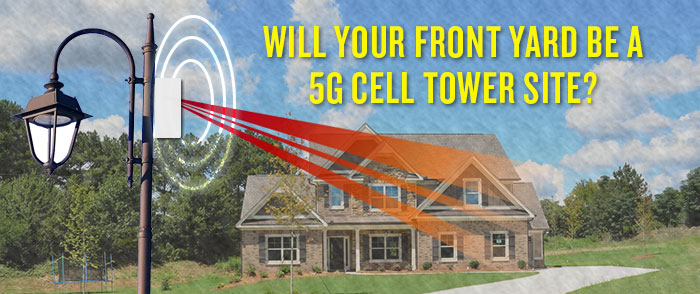
The new 5G technology has higher operating frequencies than its predecessors, and higher frequency waves have significantly more trouble penetrating barriers. This necessitates the deployment of a large number of "small cells," or miniature towers, in residential areas around the world. These small antennas will be packed considerably more closely together than regular cell towers, subjecting everyone in the vicinity to a never-ending barrage of radio frequency radiation.
There is a large amount of concern that the new tiny cell antennas may cause health problems. They worry that being in such close proximity may raise their risk of developing a cancer or other diseases. However, your worries are unwarranted. These antennas emit radio frequency (RF) radiation that's hundreds of times below acceptable levels. Surviving in close proximity to a cell tower has also been proven to not raise the odds of becoming sick.
The average range of a cell tower is between one and three miles. The tower's range is set up by the various tools installed there and the landscape it surveys. The range is generally between 0.25 and 1 mile in metropolitan areas.
The Signal's Periodicity and its own Frequency
Radio frequency (RF) radiation from cell towers has been shown to cause injury. Intense exposure to this RF radiation has been linked to nausea, migraines, and possibly cancer in humans.
Cellular towers can broadcast data and audio across a multitude of frequencies. The range of low-frequency transmissions, such as 600 MHz and 700 MHz, is larger than that of higher-frequency ones. A cell tower operating at 2.5 GHz frequencies, for instance, may provide service to an area at the very least three miles in diameter. However, the range of a cell tower's transmission is bound to in regards to a mile when employing C-band (3.5 GHz) frequencies.
Companies have to deploy additional cells in congested areas to improve the performance of cellular networks. what is a safe distance from a 5g cell tower , strategically placed, are essential to do this goal. This has led to a gradual reduction in the radius of coverage supplied by cell towers. The normal distance between cell towers in cities nowadays is between 0.2 and 1.1 miles.
Since 5G need additional cell sites, it has increased worries about any of it. Others worry that residents' privacy will undoubtedly be invaded through these cell sites. Some people worry that the introduction of 5G can lead to the widespread use of bogus cell towers referred to as stingrays. These stingrays broadcast signals to nearby cell phones, allowing for the user's identification and position to be tracked.
Third, the effectiveness of the Message
The signal's power indicates just how much energy is being transferred. More energy is being transferred at greater powers. Both signal's frequency and the length of time it is broadcast impact the signal's strength.

Many individuals be worried about potential threats with their health, personal information, and safety from 5G mobile towers. Also, what is a safe distance from a 5g cell tower are worried that their property values may drop as a result of the skyscrapers. There have even been moves in certain places to outright ban installing such cell towers.
Some people are worried about 5G since it consumes a lot more energy than older wireless technologies. 5g towers safe distance increases the possibility that radiation will be released from the towers. Some people worry that the towers' radiation might trigger serious medical issues including cancer and heart disease.
However, your worries are unwarranted. Radiation levels from 5G towers have been proven hundreds to thousands of times less than acceptable limits. Furthermore, the radiation emitted by cell towers cannot enter our body since it is not absorbed by living tissue. Furthermore, the wavelengths of the signals delivered by 5G towers are far smaller than those utilized by earlier generations of cell phones. Because of this, the distance they can travel is bound, and the cell towers must be spaced more closely than previously.
4. How Far Away YOU'RE From the Tower
There is some worry that additional cell towers could be required once the smartphone network upgrades to 5G. This is because the 5G network will employ higher frequencies, and waves at these higher frequencies have a more difficult time traversing long distances and penetrating barriers like trees, buildings, and hills. This implies you can find more transmitters around you all the time, since cell towers must be placed considerably closer together than in earlier generations of technology.
The issue is that many individuals wrongly assume that a tiny cell is really a 5G cell site. To establish wireless networks, small cells use antennas installed on utility poles or light poles to supplement larger macro-towers. Some individuals confuse them with 5G technology because of the closeness to homes and businesses, although they aren't section of a mobile phone tower.
The area immediately around a cellular phone tower is where in fact the radiation reaches its highest, also it gradually lowers as you travel farther away. Some persons who have a home in close proximity to a cellular phone tower have been proven in tests to possess health problems, such as headaches and stomachaches. https://etextpad.com/ in Germany monitored locals who lived between 400 and 800 meters from two cell towers for a decade. Cancer rates were found to be three times greater in those living in close proximity to the tower compared to those living farther away.